Learn about
Multiple Sclerosis (MS) is a chronic, often disabling disease that affects the brain and spinal cord (central nervous system). It's an autoimmune disease, meaning the immune system mistakenly attacks the body's own tissues.
In MS, the immune system attacks myelin, the protective covering of nerve fibers, causing inflammation and damage. This damage disrupts communication between the brain and other parts of the body, leading to a wide range of symptoms.
Multiple Sclerosis


Diagnosis
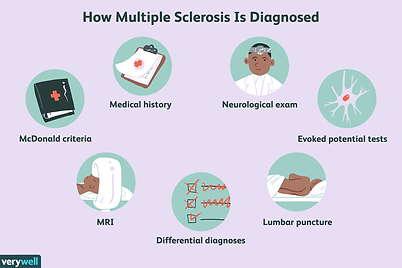
Multiple Sclerosis (MS) diagnosis relies on a combination of clinical evaluation, neurological examination, and various tests to rule out other conditions and confirm the presence of MS-related damage.
1. Medical History and Neurological Exam
2. Magnetic Resonance Imaging (MRI)
3. Evoked Potentials (EP) Tests
4. Lumbar Puncture (Spinal Tap)
5. Ruling Out Other Conditions
6. McDonald Criteria
7. Ongoing Monitoring
Symptoms

Multiple sclerosis (MS) symptoms vary widely, but common ones include vision problems (blurred or double vision, optic neuritis), numbness or tingling, muscle weakness, fatigue, and difficulties with coordination, balance, and gait. Cognitive and mood changes, bladder and bowel dysfunction, and sexual problems can also occur.
Disease-Modifying Therapies (DMT)
These medications impact the underlying disease. DMTs target some aspect of the inflammatory process of MS and appear to reduce the frequency and severity of relapses; reduce the number of new lesions in the brain and spinal cord as seen on MRI, and slow down the accumulation of disability. Decisions about taking a disease-modifying therapy are best made by carefully considering and weighing factors including individual lifestyle, disease course, known side-effects, and the potential risks and benefits of the different therapies.Due to the large number of different MS therapies currently available, as well as the fact that each therapy may have a different mechanism of action, people with MS should discuss their disease management plans with their prescribing physician.Health Canada has approved the following disease-modifying therapies for people with relapsing forms of MS.
Injectable Medications
Avonex (interferon beta-1a)
Betaseron (interferon beta-1b)
Copaxone (glatiramer acetate)
Glatect (glatiramer acetate)
Glatiramer Acetate Injection (glatiramer acetate)
Kesimpta (ofatumumab)
Plegridy (peginterferon beta-1a)
Rebif (interferon beta-1a)
Oral medications
Generic teriflunomide products
Gilenya (fingolimod)
Generic fingolimod products
Mavenclad (cladribine)
Mayzent (siponimod)
Tecfidera (dimethyl fumarate)
Generic dimethyl fumarate products
Zeposia (ozanimod)
Ponvory (ponesimod)
Infused medications
Lemtrada (alemtuzumab)
Ocrevus (ocrelizumab)
Tysabri (natalizumab)
Symptom-Management Therapies (SMT)
Symptom Management Therapies These medications help ease MS-related symptoms such as fatigue, mobility impairment, spasticity, and pain, among others.
Relapse-Management Therapies (RMT)
These are steroid medications that help to decrease the severity and duration of MS relapses. A relapse – which can also be called an attack or exacerbation – is caused by inflammation in a specific area of the central nervous system. Steroids work to actively suppress the inflammation, which helps to improve relapse symptoms and speed healing. Used over a short term, steroids are considered to be relatively safe by most practitioners. Side effects may include difficulty sleeping, stomach upset, and irritability. Over the long term these, drugs may impact other areas of the body, including liver and kidney function and bone density, among others, and so long-term and/or frequent use should be avoided.
MS Treatments: Make Access to Treatments a RealityMS doesn’t affect everyone the same way – nor does it respond to medication the same way in everyone. Virtually no other disease has seen the kind of life-altering advancements that MS has seen over the past two decades, but many Canadians living with MS can’t get sufficient, equitable, or affordable access to disease modifying treatments.
